Yangzhou Boruige Lighting Technology Co., Ltd



Where Do Solar LED Street Lights Show Their Core Environmental Advantages?
As global climate change and environmental pollution become pressing issues, governments and communities worldwide are actively switching to sustainable infrastructure solutions. Among all eco-friendly urban facilities, solar LED street lights have emerged as a leading green lighting option. Unlike traditional grid-powered street lamps that rely on fossil fuel energy and generate massive pollution, solar LED street lights integrate renewable solar energy and high-efficiency LED lighting technology, delivering comprehensive environmental benefits. This article deeply explores where the environmental advantages of solar LED street lights are reflected, helping you understand their value in urban greening and carbon neutrality.
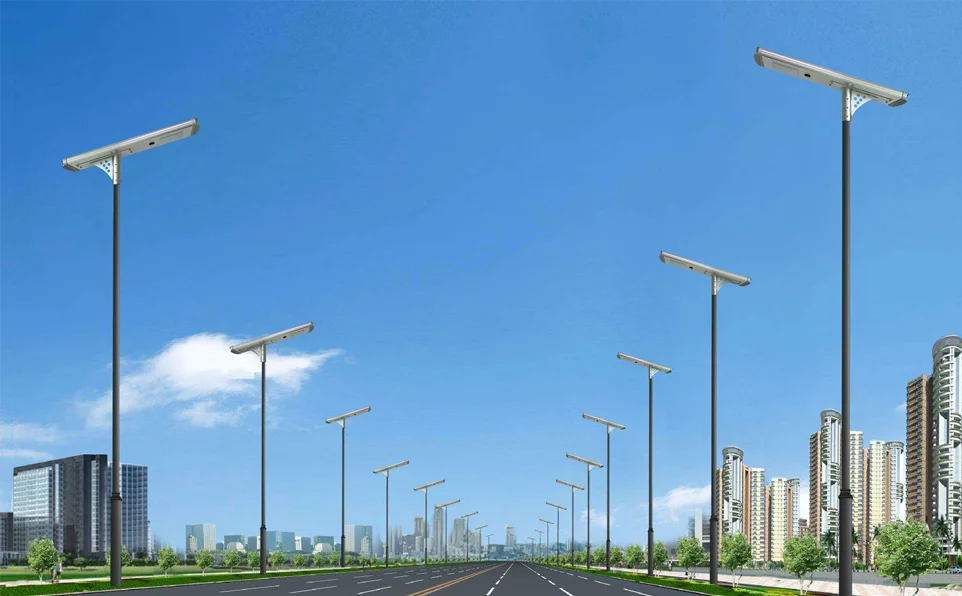
1. Zero Operational Carbon Emissions Cut Fossil Fuel Reliance
The most prominent environmental feature of solar LED street lights is their carbon-free operation. Traditional street lighting depends entirely on municipal grid electricity, most of which is generated by coal and natural gas thermal power plants. Statistical data shows that conventional thermal power production emits about 0.785kg of carbon dioxide per kilowatt-hour, and street lighting accounts for nearly 30% of urban public energy consumption, becoming a major source of urban carbon emissions and air pollution.
In contrast, solar LED street lights operate independently of the utility grid. They convert unlimited, free sunlight into electricity via photovoltaic panels during the day and store energy in batteries for nighttime illumination. Throughout the entire operational cycle, there is no fossil fuel combustion, no CO2, sulfur dioxide, or nitrogen oxide emissions. A single 60W solar LED street light can reduce approximately 258kg of annual carbon emissions. When popularized on a citywide scale, these lights can cut urban lighting carbon emissions by over 90%, effectively alleviating global warming and urban haze problems.
2. Ultra-High Energy Efficiency Reduces Resource Waste
Energy efficiency is another key environmental advantage of solar LED street lights. Traditional street lamps mostly use high-pressure sodium lamps or metal halide lamps, which have low luminous efficiency, large energy loss, and short service life. Most of their energy is converted into heat rather than light, causing serious energy waste.
LED light sources boast ultra-high photoelectric conversion efficiency, consuming only 20%-30% of the energy required by traditional lamps under the same brightness. Combined with solar power’s self-sufficient energy supply model, solar LED street lights eliminate long-distance power transmission losses inherent to grid power supply. Additionally, most modern solar LED street lights are equipped with intelligent light sensors and timing control systems. They automatically turn on at dusk and turn off at dawn, adjusting brightness according to ambient light conditions to avoid invalid energy consumption, maximizing energy utilization and reducing unnecessary resource waste.
3. No Cable Construction Damage Protects Ecological Landscape
The off-grid working mode of solar LED street lights avoids ecological damage caused by traditional lighting infrastructure construction. Traditional street light projects require extensive trenching, wiring, and underground cable laying, which destroy surface vegetation, damage soil structure, and disrupt original ecological landscapes in urban roads, rural areas, and scenic spots.
Solar LED street lights are standalone systems with no need for complex grid wiring projects. They require only simple fixing and installation, minimizing ground excavation and vegetation damage. This advantage is particularly critical for ecological reserves, rural pastoral areas, and tourist scenic zones. It effectively protects natural habitats, maintains landscape integrity, and avoids secondary ecological damage caused by infrastructure construction, realizing harmonious coexistence between urban lighting facilities and nature.
4. Low Pollution & Long Lifespan Reduce Solid Waste
Waste pollution from lighting equipment is easily overlooked but vital to environmental protection. Traditional street lamps have a short service life of only 2-3 years and contain harmful substances such as mercury and lead. Discarded waste lamps produce toxic and hazardous waste, which pollutes soil and water sources if not properly disposed of.
Solar LED street lights achieve dual environmental protection of low pollution and low waste. LED light sources contain no mercury, lead, or other toxic substances, complying with global green environmental protection standards. Meanwhile, their service life reaches 50,000-80,000 hours, equivalent to 8-10 years of normal use, far longer than traditional lamps. The long service life greatly reduces the frequency of equipment replacement, cuts the generation of solid waste, and lowers the environmental pressure caused by waste lamp recycling and disposal.
5. Scientific Light Design Minimizes Urban Light Pollution
Modern environmental protection covers not only air and ecological protection but also the suppression of light pollution. Traditional street lights have scattered light, strong glare, and unregulated lighting angles. Excess stray light illuminates the night sky, causing urban light pollution, disturbing human sleep rhythms, and interfering with the living habits of birds, insects, and other organisms, destroying urban ecological balance.
Professional solar LED street lights adopt precise optical design and directional light cutoff technology. They use 3000K-4000K neutral warm light with soft brightness and no strong glare. The light is concentrated on road surfaces without overflowing upward, effectively reducing skyglow and stray light. This scientific lighting mode meets road illumination needs while protecting the urban night ecosystem, reducing light pollution’s impact on humans and wildlife, and creating a healthier urban night environment.
Conclusion
The environmental advantages of solar LED street lights run through energy supply, operational consumption, infrastructure construction, waste discharge, and light environment protection. From zero carbon emissions and high energy efficiency to ecological protection, low waste output, and light pollution reduction, they comprehensively solve multiple environmental pain points of traditional street lighting. As a mature and reliable green infrastructure solution, solar LED street lights are not only an important choice for urban energy conservation and emission reduction but also a key part of promoting sustainable urban development and achieving global carbon neutrality goals.